Replacing an air filter often starts with a familiar question: which product will fit the equipment?
Dimensions are an essential starting point, but a useful enquiry also includes the filter construction, operating airflow, required filtration grade and installation conditions. Two filters with similar outside dimensions can have different frames, sealing arrangements and media configurations.
CINRIWA supplies pre-filters, medium-efficiency filters, HEPA and ULPA filters, and specialist filtration products. This guide explains how to organise your requirements and identify the product information to review before ordering.
Start with the Filtration Task
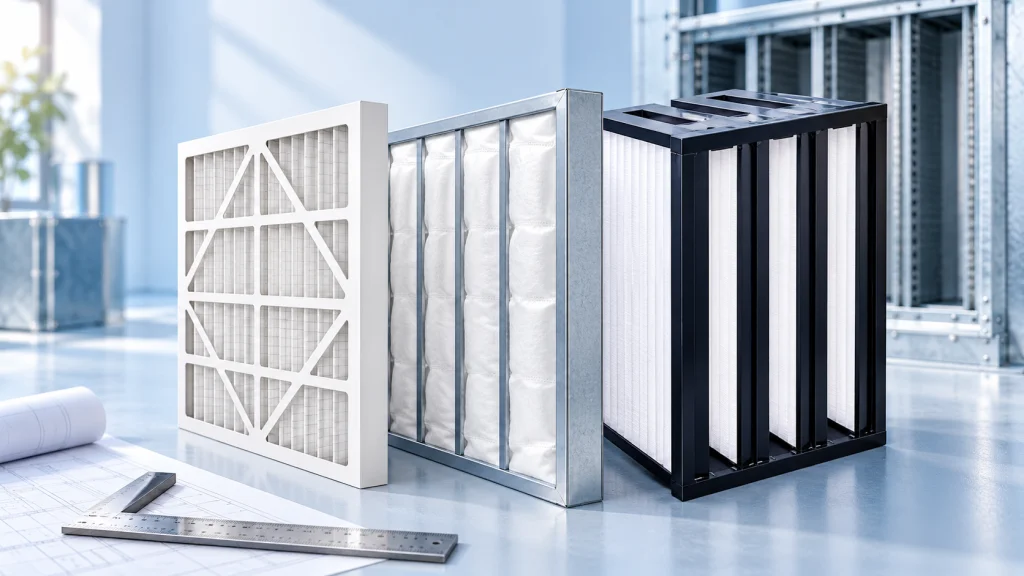
Mechanical air filters capture airborne particles as air passes through their filtering structure. Panel, pocket and compact filters provide different ways to arrange the filter media within the available installation space.
The first selection question is what the filter needs to capture. General ventilation dust, paint overspray, liquid droplets and gaseous contaminants call for different product considerations. A particulate filter should not be assumed to provide gas or odour control.
Next, identify the filter’s position in the equipment. Is it an upstream pre-filter, an intermediate stage or the final filtration stage? This helps narrow the product range before comparing individual models.
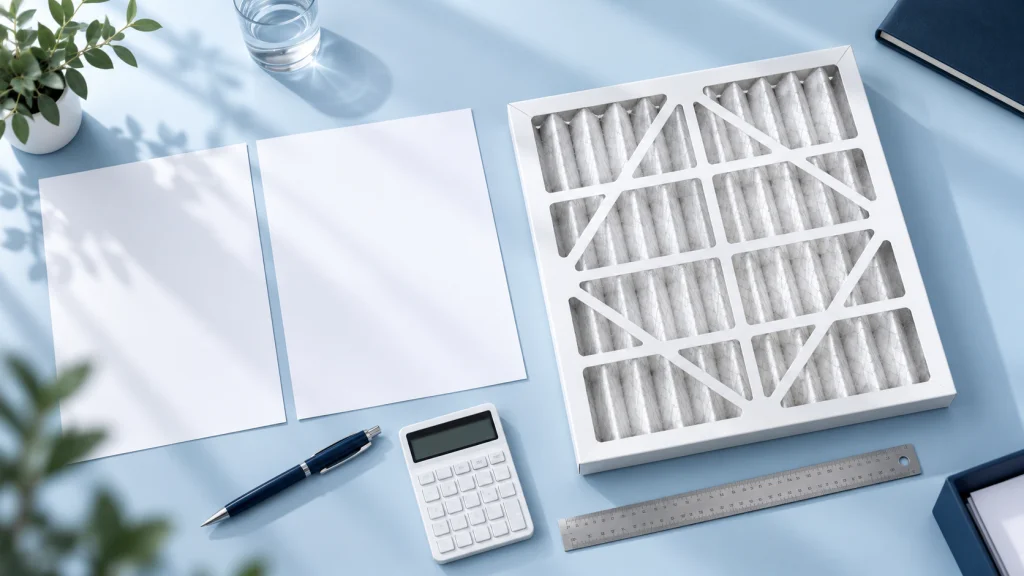
Panel Pre-Filters: Check the Frame and Installation Depth
The CINRIWA pre-filter range includes cardboard pleated panels, cardboard fiberglass panels, pleated primary filters, ambient-temperature pre-filters, air-conditioning filters and high-temperature filter panels.
For example, our cardboard pleated panel filter uses synthetic fibre media in a cardboard frame, with listed depth options of 25, 51 and 102 mm. When reviewing this product, confirm the complete outside dimensions and the installation slot depth.
The ambient-temperature pre-filter offers metal-frame options and three constructions: flat, pleated, and inner-and-outer frame. Its listed depth options are 45 and 90 mm.
These are separate product configurations. When sending an enquiry, specify both the product name and the required construction rather than describing every option simply as a “panel filter.”
For cardboard-frame products, include any exposure to condensation, splashing or prolonged damp conditions so that frame suitability can be reviewed.
Bag and Compact Filters: Look Beyond the Front Dimensions
CINRIWA’s medium-efficiency range includes bag filters, polyester pocket filters, mini-pleat filters, V-bank filters and cassette filters, alongside other listed constructions.
For a bag filter, the frame width and height describe only part of the installation requirement. Record the pocket depth and the clearance available behind the frame. A photograph of the installed filter can help show how the pockets sit inside the equipment.
For compact and V-bank filters, record the complete body depth and any header or flange dimensions. Include photographs of the mounting arrangement, particularly when replacing an existing filter supplied by another manufacturer.
Product shape alone does not establish filtration performance. Compare the grade and operating data for the specific configuration being considered.
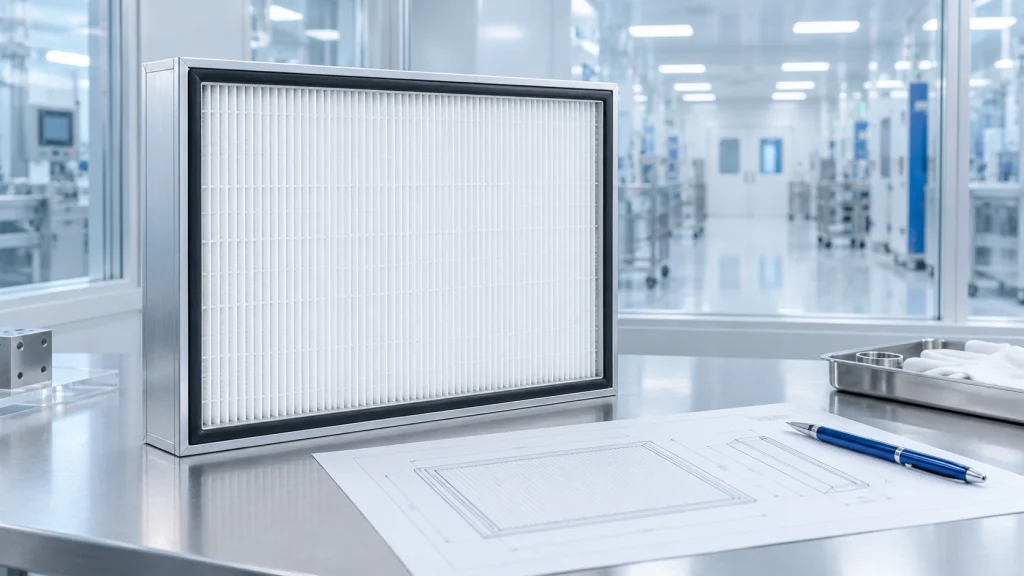
HEPA and ULPA Filters: Specify the Complete Configuration
CINRIWA’s high-efficiency range includes mini-pleat HEPA and ULPA filters, separator-type filters and gel-seal configurations.
A request for a “HEPA filter” leaves several practical details unresolved. To identify an appropriate configuration, provide:
- Required filtration grade.
- Outside width, height and depth.
- Frame material.
- Gasket or gel-seal arrangement.
- Operating airflow.
- Installation position and available clearance.
Our mini-pleat series groups several depth options within one product family. The gel-seal series provides a different sealing configuration. Review the specifications associated with the selected option rather than assuming that every size or construction shares the same operating values.
For replacement enquiries, clear photographs of the existing frame edges and sealing surfaces are particularly helpful.
Recognise When a Specialist Product Is Needed
Some enquiries fall outside general ventilation filtration.
CINRIWA’s specialist range includes fiberglass paint-arrestor media, accordion paint-arrestor paper, metal-mesh air-liquid separators, oil-mist filter elements, dust-filter cartridges and activated-carbon products.
Describe the process as well as the existing filter. For example, “filter for a spray area” gives less useful information than an explanation of the coating process, the filter’s position and the type of material being collected.
For activated-carbon enquiries, identify the gas or odour concern and the operating conditions. For dust cartridges, provide the mounting details and equipment model. These details help direct the enquiry to the relevant product family.
Compare Specifications on the Same Basis
Keep airflow values, pressure-drop values and configuration details together when comparing products.
CINRIWA product tables use the units shown for each series. Record whether an airflow value is in CFM or m³/h, and clearly identify dimension units. A number without its unit can lead to an incorrect comparison.
Also distinguish between nominal size and the measured outside dimensions. Include projecting flanges, headers and gaskets where they affect fit.
If a table does not list a value for the configuration you need, ask for clarification. Do not carry a value across from a neighbouring size or a different construction.
Prepare a Clear Enquiry
A well-prepared enquiry helps reduce repeated questions during product review. Send the following information where available:
| Information | What to provide |
|---|---|
| Existing product | Model number and a readable label photograph |
| Dimensions | Width × height × depth, with units |
| Installation | Frame, flange, gasket and mounting photographs |
| Filtration requirement | Required grade or equipment specification |
| Operating conditions | Airflow, temperature and relevant moisture exposure |
| Supply requirement | Quantity, delivery destination and requested timing |
For custom requests, include a drawing or a dimensioned sketch. Identify which dimensions are fixed by the equipment and which features you would like to change.
CINRIWA can review your requirements against the available product configurations and discuss the information needed for a quotation.
Need help identifying a replacement or preparing a custom enquiry? Contact CINRIWA with your filter photographs, dimensions and application details.