
FILTER SELECTION GUIDE
Choose a Filter That Fits Your Application
Start with your application, equipment and performance requirements. Follow these steps to prepare the information needed to discuss a suitable air filter with our team.
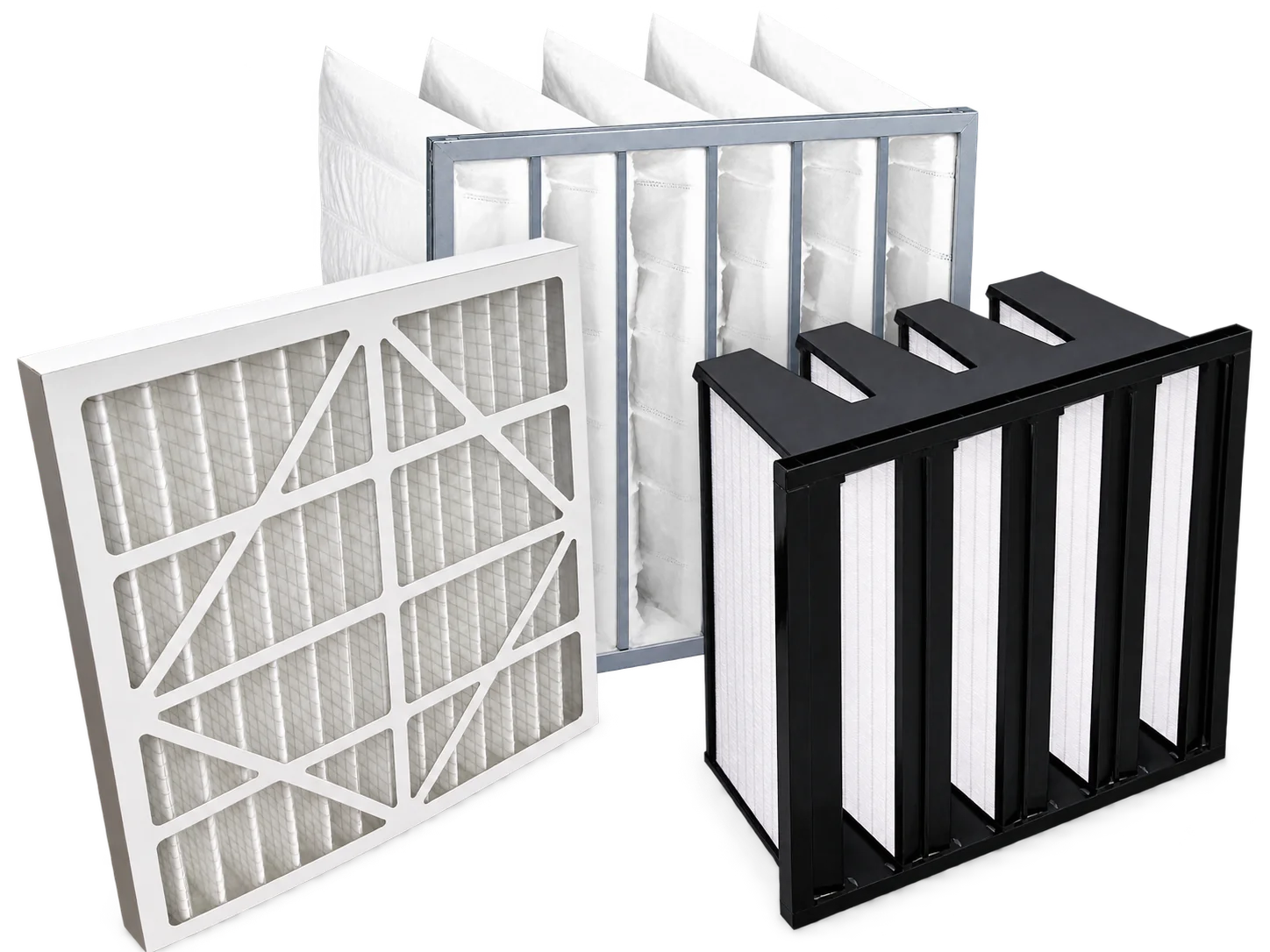
01 / Identify Your Application
Start with what the filter needs to protect and the conditions in which it will operate.
Equipment & System
Tell us where the filter is installed, the equipment model and whether it is part of a single-stage or multi-stage system.
Airborne Contaminants
Describe the dust, particles or oil mist involved. Identify gases or odours separately so the filtration approach can be reviewed.
Filtration Purpose
Explain whether the priority is protecting equipment, improving ventilation air quality or meeting a defined process requirement.
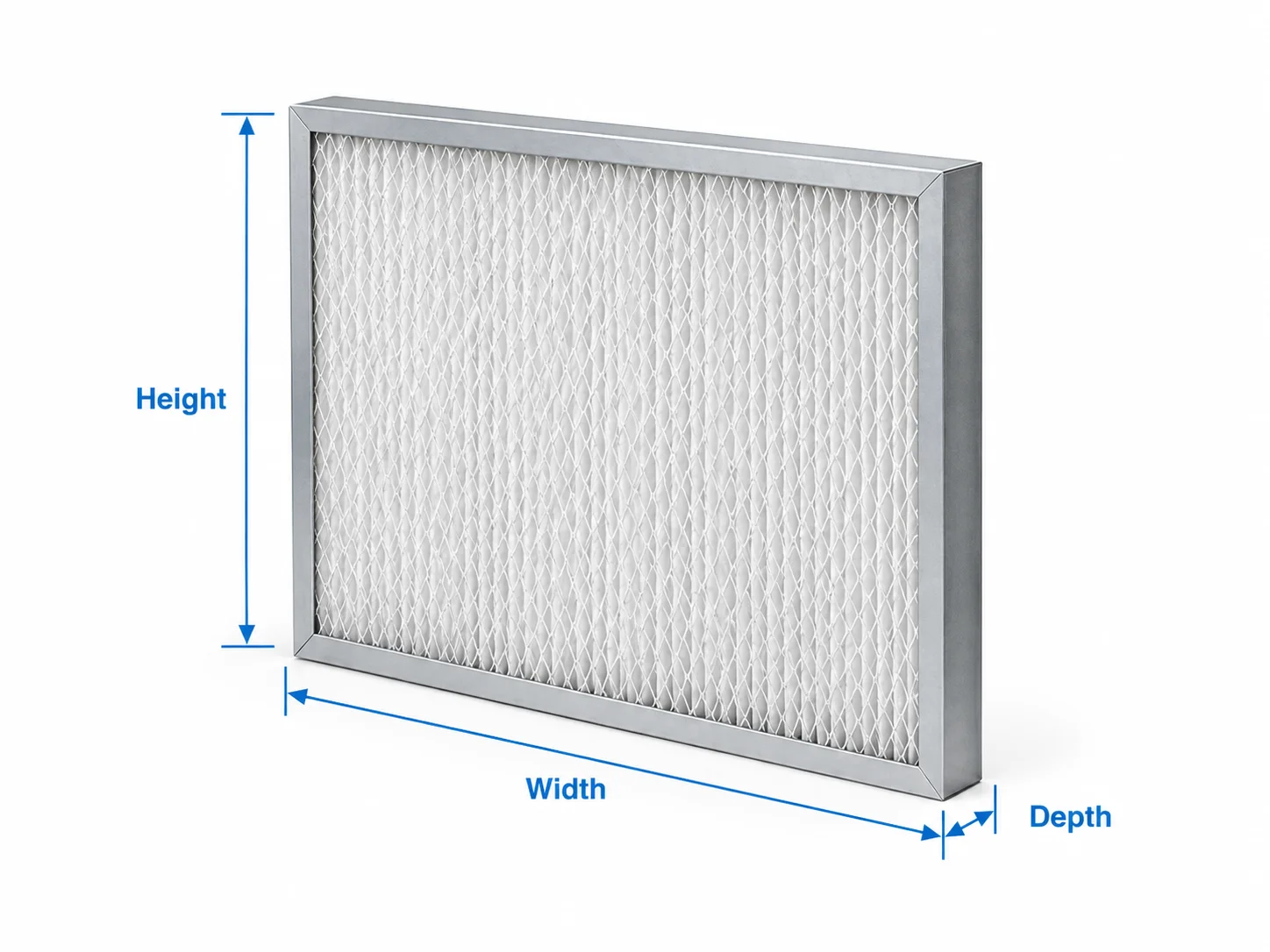
02 / Check Dimensions & Installation
- Measure the filter width, height and depth; include mm or inches.
- Check the available installation depth and access space.
- Confirm the frame material, gasket location and sealing arrangement.
- Record the airflow direction and how the filter is held in place.
- Send a clear photo of the existing filter, its label and the installation.
Matching dimensions alone does not confirm equivalent performance. Check the operating requirements before ordering.
03 / Confirm Performance Requirements
Filtration Grade
Provide the required efficiency class and test standard, or a clear photo of the existing filter label.
Operating Airflow
Provide the airflow through the filter and its units, such as m3/h or CFM. Performance needs to be assessed at the intended airflow.
Pressure Drop
Share the permitted initial pressure drop and replacement limit, if specified. Confirm compatibility with the fan and system.
Operating Conditions
State the normal and maximum temperature, humidity and any exposure to moisture, oil or chemicals.
Understanding filtration grades
For general ventilation filters, ISO 16890 uses Coarse, ePM10, ePM2.5 and ePM1 classifications. Share the complete classification and percentage from your specification or test report.
If your specification uses MERV or an older EN 779 grade, include the original standard and grade. Different grading systems should not be treated as exact one-to-one equivalents.
When your application has specific requirements
HEPA filtration and controlled processes require separate performance criteria. Provide the applicable standard, specified filter class, testing requirements and equipment documentation for review.
Product performance and suitability should be confirmed against the relevant product data and application requirements.
04 / Review Operating Costs
Meet the required filtration performance first, then compare the costs of operating and maintaining the filter.
Purchase & Replacement
Consider purchase price together with the expected replacement frequency under your actual operating conditions.
Airflow Resistance
Compare pressure drop at the same airflow. Resistance affects the work needed to move air through the system.
Maintenance & Disposal
Include labour, access, downtime and disposal when reviewing the overall cost.
Service life and energy use depend on the system, operating hours and contaminant load. Review these conditions before making cost comparisons.
Need Help Selecting a Filter?
Send the details below so we can review your requirements with you.
- Existing filter photos and label
- Width, height, depth and measurement units
- Equipment model and installation photos
- Required grade, airflow and pressure-drop limits
- Operating conditions, quantity and delivery destination
Send Us Your Requirements
If some information is unavailable, start with the existing filter label and photographs. We can discuss what else is needed before confirming a product.