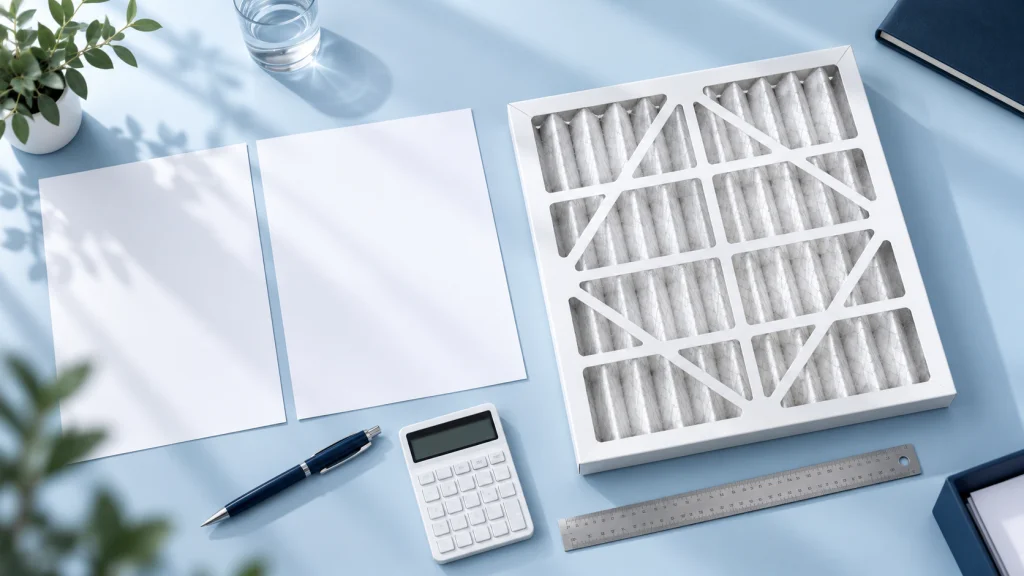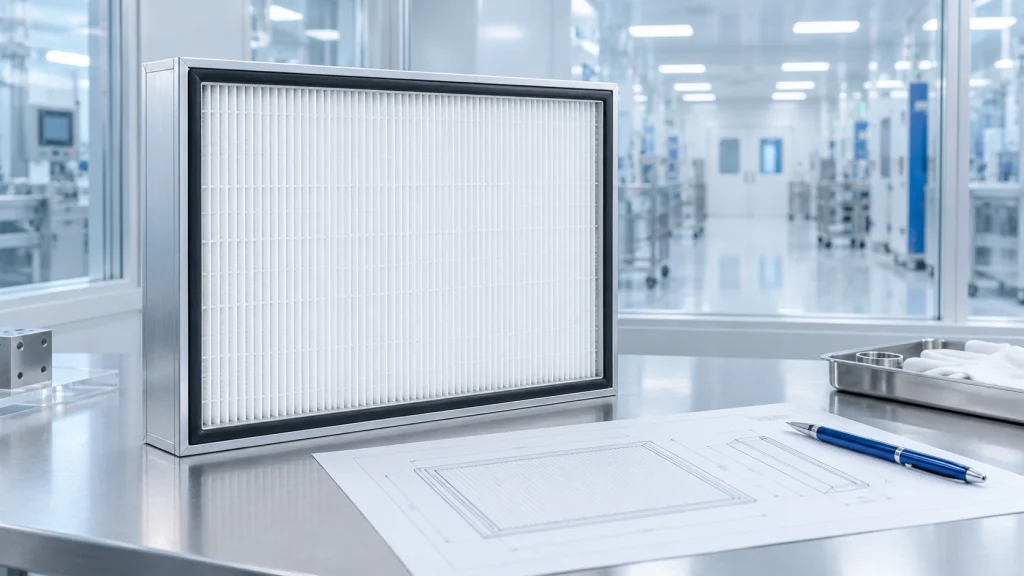
Not every discarded filter has reached the end of a useful service period. Incorrect orders, damaged packaging and unsuitable cut sizes can create waste before installation. Improving these practical details can reduce avoidable losses without making unsupported claims about service life.
Prevent specification mistakes
Keep the agreed product type, dimensions, frame and seal in a controlled purchasing record. Use a separate line for each configuration and retain the drawing revision where relevant. This helps prevent a repeat order from carrying forward an outdated size.
When an alternative is proposed, confirm it before purchase. A filter that arrives in the wrong construction can create both delay and unnecessary handling.
Protect unused stock
Leave products in their protective packaging until needed and follow the supplied storage instructions. Arrange stock so media is not crushed or exposed to accidental damage. Identify each item by its intended installation, especially when several filters look similar.
Check incoming goods promptly so transit damage or specification discrepancies are recorded before the maintenance date.
Plan cut pieces before ordering
For pre-filter media rolls and pads, list the required finished dimensions and quantities. Review how those pieces will be prepared before deciding whether rolls or supplied cut pads suit the task.
Cut-piece supply can help organise production, but the best arrangement depends on the required sizes and handling process. Do not assume a fixed waste reduction without reviewing the actual cutting layout.
Avoid making reuse the default
Extending use beyond the equipment requirements or washing an unapproved filter is not a reliable waste-reduction strategy. Base maintenance on the product instructions and actual operating requirements. Keep this separate from improvements to packaging, ordering and material handling.
Match quantities to a realistic requirement
Review planned use and available storage before ordering. Excess stock that cannot be protected or identified may create avoidable losses. For repeat material orders, note which sizes are used regularly and which are occasional requirements.
Send CINRIWA the required piece sizes, quantities and supply form to discuss a practical order. Small improvements in specification and handling can make the purchasing process more efficient.